 By Dud Eddy
A garage door takes up a large part of the front of most homes, and it gets used every day. The right choice balances fit and style with thermal performance and brand support, taking into account the actual opening and how the household uses the space.
Get the fit right before chasing style
Start with the opening itself, not the brochure. Measure width and height at several points. Old frames are rarely square, and a small difference can stop a new door from forming a tight seal. Don’t rely on a single tape reading taken from the floor.
Headroom and side clearance decide what type of mechanism can be fitted. A sectional door runs back on overhead tracks, and it needs clear space above the opening and along the ceiling. A roller door coils above the opening, with the amount of coil space varying by model. Tilt doors swing out and up in one piece, so they need clear space in front while they move.
None of this can be settled from specs alone. Track depth and fixing points change with ceiling shape, while obstructions like lights or storage racks also affect what fits. Access matters too. A garage used only for parking has different needs from one with an internal entry door or daily foot traffic through the main opening.
Have a professional measure the opening.
Many homes have openings that don’t match standard sizes, so custom sizing is common. A made-to-measure door seals better and places less strain on the motor and tracks. Forcing a near-fit standard size into the gap leads to drafts and uneven wear.
Side room counts too. Automation kits and lock gear sit beside the tracks, so tight brick piers can limit choices. Ceiling fans and openers from a previous installation can eat into the space a new track needs. A good installer notes the power outlet location and slab slope before a model is picked. Those small site details prevent rework on installation day.
Match the door to the facade
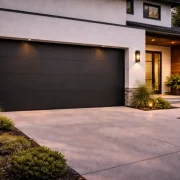
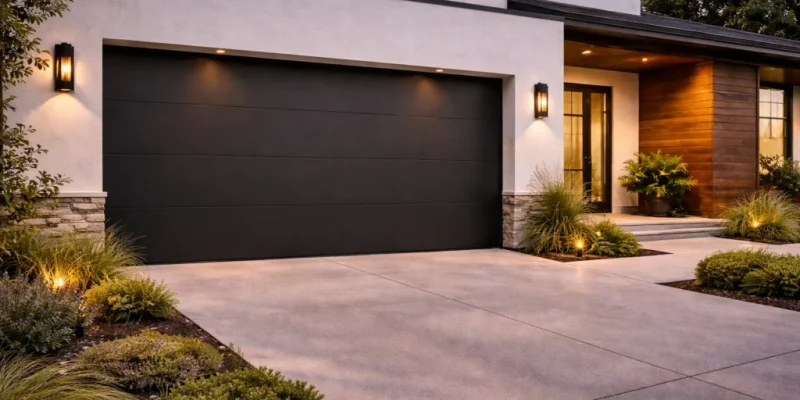
The garage door often covers a third or more of the street view, so style carries weight. Flat panels with a smooth coated-steel finish suit contemporary lines and low-pitched roofs. Timber-look finishes and plank profiles sit better with character facades and pitched tile roofs.
Color does a lot of the work. A door matched to trim or roof color looks settled, while a sharp contrast can dominate the whole front. Texture matters as well. Woodgrain embossing softens large flat areas, and small windows near the top row break up mass and let daylight into a dark garage.
Think about daily use and access at the same time. If bikes and bins move through often, a separate pedestrian entrance or well-placed opener control saves wear on the main door. If someone in the household has limited mobility, keypad entry and smartphone control reduce the need to handle a heavy door or hunt for keys.
Steel with a baked color coat dominates new builds because it holds color and needs little care. Timber-look wraps give warmth without the upkeep of real boards, and they pair well with brick and render. Dark colors absorb more heat in full sun, so weigh the street appearance against the extra heat. Ask for large swatches viewed outside in daylight rather than under shop lights. Tidy curb appeal also helps when the home is listed for sale.
Treat thermal performance as a practical question
Garages are rarely heated or cooled like living rooms, but temperature still affects how the space gets used. A bare steel skin passes heat and cold quickly, so a west-facing garage can feel harsh on summer afternoons. If the garage holds tools or paint, swings in heat and damp can shorten their life.
Ask for numbers, not adjectives. Request the panel R-value and the whole-door figure if it’s tested. The two can differ because air gaps around seals and joints affect the installed result. Polyurethane cores and thicker insulated sections tend to show higher test values, but compare like with like and check what test method sits behind the number.
Seals and ventilation shape the outcome as much as the panel. Bottom seals and side seals limit dust and drafts when they’re fitted well. If the garage connects to the house through an internal door, ask the installer about sealing and airflow for that wall as well. Don’t assume insulation alone changes living-room comfort or makes the garage fit for sleeping or full-time work. Turning a garage into living space generally involves local approval requirements.
How the garage is used should guide the budget. A garage that stores gym gear and work tools through winter benefits more from insulated panels and tight seals than one used only to shelter a car overnight. Attached garages share at least one wall with living areas, so drafts through that wall are felt inside. In detached garages, condensation on tools matters more than shared walls.
Give real weight to the garage doors brand name
Shoppers often start by typing a garage doors brand name into search, and there’s good reason for that habit. A long-standing brand has test data and installation details behind its models. It also has a parts supply network that installers can use when rollers or remotes need replacement years later.
One example is B&D, whose sectional and roller models appear in many suburban homes. Established names tend to publish clear specs for wind suitability and opener compatibility, which makes comparison easier. Seeing samples and talking through site limits is simpler with a specialist installer like AllStyle Garage Doors & Window Shutters during an at-home consultation in the driveway.
That doesn’t mean a familiar badge alone settles it. Ask every contender the same questions about warranty length and parts wait times. Check who honors the warranty and how long coverage lasts on panels and springs separately. A short wait for common parts helps when the door won’t close on a workday morning.
Look closely at hardware and build specs
Price tags hide a lot. Two doors can look the same from the street yet differ in steel gauge and joint design. Ask for the spec sheet. Compare steel thickness and panel joint details side by side rather than by touch or press tests, which prove little and can be unsafe around tensioned parts.
Hinges and rollers determine how smoothly the door travels. Look at hinge count and roller type on the quote. Nylon rollers with sealed bearings run quieter than basic steel wheels in many installations, and paired hinges add stiffness on wide double doors. Springs do the heavy lifting, so ask whether the system uses torsion or extension springs and what cycle rating they carry.
Finish matters for upkeep. Ask how the color coat is applied and what cleaning it needs. A baked-on finish resists chalking and fading better on sun-exposed fronts when it’s washed as directed, but no finish is maintenance-free. Get the paint warranty in writing and check whether coastal air or harsh cleaners void it.
Wind suitability is separate from looks. Ask what wind rating the door carries and whether it suits the site’s exposure. Coastal strips and open ridgelines place higher loads on a wide double door than a sheltered court does. Request the paperwork that shows the rating and fixing method, and keep it with the house files for future insurance questions.
Pair the door with a compatible opener and safety set
An opener must match the door’s weight and balance. Belt drives run with less rattle than chain drives, which helps when a bedroom sits above the garage. Wall-mount jackshaft types free ceiling space in some layouts, but they don’t suit every track. There’s no single best drive for all homes.
Power and access extras deserve a practical look. Battery backup can keep the door moving through a blackout, and it suits households where outages would trap a car inside. External keypads and phone apps help where several people need entry at different hours. Rolling codes and a manual release add a layer of control if the power drops or a remote goes missing.
Safety gear needs respect. Modern setups have obstacle detection and auto-reverse, along with photo-eye sensors near the floor. At handover, have the installer demonstrate each safety function as set out in the manual. Don’t place hands or tools in the path to check it, and don’t let kids play with remotes or wall buttons.
Security goes beyond the lock. An internal manual release lets the door be opened during a fault, while an external key release gives access if power and remotes both fail. Timed auto-close suits busy households, but it must be paired with working sensors. Phone alerts that show open and closed status help when the door is out of sight during the day.
Compare full quotes and plan for upkeep
Supply-only prices mislead buyers. A total cost of ownership view counts removal of the old door and site preparation as well as new tracks and opener wiring. Ask whether the quote covers electrical work and disposal fees. A cheap door with pricey extras at installation time rarely stays cheap.
Warranty terms tell more than headline years. Check what’s covered on the panel surface and on moving parts separately. Find out who to call for service and how long common spares take to arrive. A clear service plan with yearly checks on tension and alignment costs less over time than emergency callouts after a failure.
Finish care is part of the deal. Rinse dust and salt from the surface regularly. Lubricate rollers and hinges as the manual directs, and keep tracks clear of clutter. Book a professional service when movement turns rough or noisy.
Look into the installation team as well as the product. Ask how long the crew has fitted that brand and what the handover covers. A thorough handover walks through remotes and safety functions with a live demonstration. Get the full quote in writing with model numbers and warranty periods listed line by line.
The right garage door fits the opening and suits the street. It also has specs and support to back daily use. Start with accurate measurements, then compare the fit and long-term support as carefully as the finish.