 By Dud Eddy
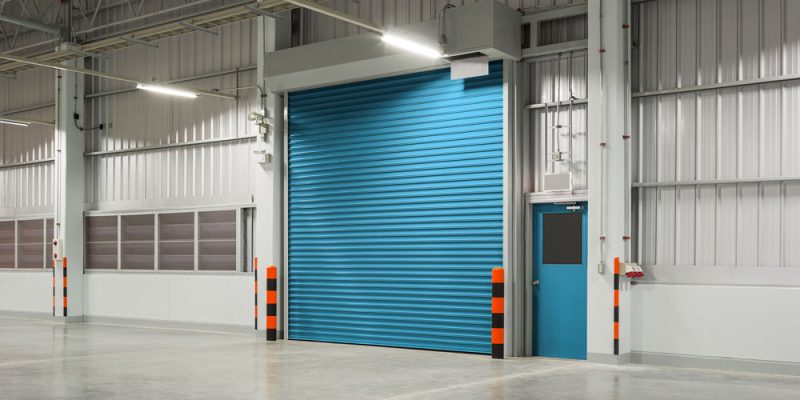
Every business owner knows that securing commercial premises is not something to leave to chance. Break-ins, vandalism, smash-and-grab incidents, and storm damage are real risks that cost Australian businesses millions of dollars each year. When it comes to physical security solutions, few products match the combination of durability, deterrence, and practicality offered by commercial roller shutters.
But not all commercial shutters are created equal. Walk through any Perth industrial estate, shopping strip, or commercial precinct and you’ll see a wide variety of shutter types, from light-gauge aluminium used on small retail tenancies to heavy-duty extruded systems protecting warehouses and manufacturing facilities. Understanding the differences between products is essential if you want a solution that’s actually fit for purpose.
This guide covers everything a business owner, property manager, or building contractor needs to know about selecting commercial roller shutters in Perth.
What Sets Commercial Roller Shutters Apart from Residential Products
The distinction between residential and commercial roller shutters goes beyond aesthetics. Commercial products are engineered to a fundamentally different specification heavier profile walls, more robust locking mechanisms, higher cycle ratings, and often the ability to span larger openings.
In a residential context, a roller shutter might open and close a few times a day. In a commercial setting think a service station, a drive-through, or a loading bay the same shutter might cycle dozens of times in a single shift. Commercial shutters are built to handle that kind of workload over many years without significant degradation.
Insurance is another consideration. Many commercial property insurers specify minimum security standards for shutter systems. Fitting an undersized or under-specified product to a commercial opening may not only void your insurance claim in the event of a break-in but could also affect your ongoing premiums.
Cyclone Roller Shutters: When Standard Products Aren’t Enough
For businesses in cyclone-prone regions or those in areas exposed to extreme wind events, standard commercial roller shutters may be insufficient. Perth and Western Australia’s north-west are no strangers to severe weather, and for properties that require compliance with cyclone wind ratings, purpose-engineered products are essential.
A cyclone roller shutter is designed and tested to withstand the wind loads associated with rated cyclone categories. These systems use heavier extruded profiles, reinforced guides, and engineered fixing systems that distribute wind loads safely into the building structure. For new commercial builds in wind-rated zones, specifying a cyclone-rated shutter from the outset is significantly cheaper than retrofitting one later.
Even for businesses outside formal cyclone regions, cyclone-rated shutters offer a higher baseline level of storm and wind protection, a consideration worth factoring in given the increasing frequency of severe weather events across WA.
Understanding Extruded Roller Shutter Profiles
The profile is the fundamental building block of any roller shutter. In commercial applications, extruded aluminium profiles are the industry standard — they offer superior strength-to-weight ratios, dimensional accuracy, and resistance to the warping and deterioration that can affect roll-formed products over time.
Profile width directly affects the overall panel rigidity, spanning capacity, and the degree of vision (light and air transmission) the shutter provides. Here’s a brief overview of the main commercial profile options:
The 36mm extruded vision roller shutter is a compact, high-strength profile suited to medium-span commercial openings where a degree of visual permeability is desirable — retail shopfronts, for example, where displaying merchandise after hours is an advantage.
The 50mm extruded vision roller shutter steps up the strength and spanning capability, making it suitable for wider openings and environments where a more robust barrier is required. The wider profile also improves the rigidity of the curtain under wind load.
For the largest commercial and industrial openings, the 77mm wide-span roller shutter provides the spanning capacity and structural performance required for warehouse doors, large factory openings, and other high-demand applications. The wider slat profile means fewer interlocks across the curtain height, improving overall system rigidity.
Vision vs Solid Profiles: Making the Right Choice
One of the key decisions in commercial shutter specification is whether to use a vision profile (with perforations or open sections that allow light and air transmission) or a solid profile (fully enclosed slats).
Vision profiles are popular in retail settings because they allow potential customers to see into a premises after hours which can deter break-ins through the normalisation of visibility. They also allow air circulation and reduce the build-up of heat inside a building when the shutter is closed.
Solid profiles offer maximum privacy and light exclusion. They’re the preferred choice for premises storing valuable goods, for businesses with privacy requirements, or for any application where preventing visibility into the premises is a priority. From a thermal perspective, a well-fitted solid shutter also provides better insulation against both heat and cold.
Key Factors When Specifying a Commercial Roller Shutter
A well-specified commercial shutter installation starts with a thorough assessment of the application. The following factors all influence product selection:
- Opening dimensions — width and height dictate spanning requirements and therefore profile selection
- Operational frequency — how many cycles per day the shutter needs to handle
- Security rating requirements — are there specific insurance or compliance standards to meet?
- Wind load requirements — is the building in a wind-rated or cyclone-prone zone?
- Aesthetic requirements — does the installation need to complement a specific architectural style?
- Drive type — manual operation, motorised, or automated?
- Integration requirements — does the shutter need to interface with access control, alarm, or building management systems?
Maintenance and Longevity: Getting the Most from Your Investment
A commercial roller shutter is a significant capital investment, and like any mechanical system, it requires regular maintenance to deliver its full service life. Neglected shutters develop guide rail wear, slat damage, motor faults, and locking mechanism failures, all of which are more expensive to address reactively than proactively.
A routine maintenance programme typically includes lubrication of all moving parts, inspection of guide rails and end caps, verification of motor operation and limit settings, and a check of locking bar engagement. In high-cycle applications, quarterly inspections are a sensible baseline.
It’s also worth ensuring that your installer offers an ongoing service and repair capability. Having to source a new contractor every time a fault develops is inefficient and can leave your premises unsecured for extended periods. Building a relationship with a provider who knows your installation and has your product specifications on file is a smart operational decision.
Working with Contractors and Fit-Out Teams
For building contractors and commercial fit-out teams, roller shutter specification is often part of a broader construction programme. Early engagement with a specialist shutter supplier is strongly recommended, it allows structural provision for guide rails and hood boxes to be incorporated into the building design, avoids costly retrofitting, and ensures the product is on site in time for the construction programme.
Lead times on commercial shutter products, particularly custom-sized or cyclone-rated systems, can be significant. Factoring this into your construction programme from the outset prevents delays downstream.
Final Thoughts on Commercial Roller Shutter Selection
Choosing the right commercial roller shutter comes down to matching the product specification to the application. An undersized or incorrectly specified shutter may appear to function adequately in the short term but will prove inadequate over time, with implications for security, insurance, maintenance costs, and operational continuity.
Taking the time to understand the range of products available, from compact 36mm extruded profiles through to heavy-duty wide-span systems and specialist cyclone-rated shutters, puts you in a much stronger position to make a decision that delivers genuine long-term value.
Engaging an experienced commercial shutter specialist early in the specification process, providing clear information about your application, and ensuring the installation is carried out to the manufacturer’s standards are the cornerstones of a successful commercial shutter project.