 By Dud Eddy
Wine cellar design matters a lot. It is something that performs and impresses altogether. A well-executed design is more than just a refined look. It protects a collection, allows for long-term storage, and transforms a practical space into a unique architectural feature. The difficulty for architects, realtors, interior designers, and homeowners is to balance performance with presentation: the space must maintain a steady temperature and humidity while still feeling deliberate, elegant, and connected to the rest of the home. If you choose to design a dining room wine cellar, it will enhance the look as well as the usability of that space. A dining room wine cellar also offers easy accessibility.
The best wine room interiors are never purely decorative. Every selection, from insulation to shelves to lighting, influences how wine ages and how the space seems visually. The same principles apply whether you’re designing a little under-stairs installation or a large luxury wine cellar.
Start With the Right Storage Conditions
Wine is sensitive to temperature, light, vibration, and dry air. If the area is intended for serious home wine storage, these considerations should be made before selecting finishes or display features.
- Temperature is most important
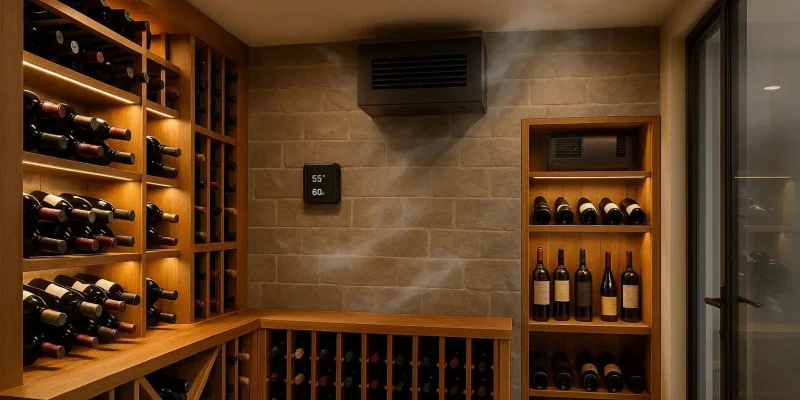
For long-term storage, the ideal wine cellar temperature is normally approximately 55°F, or 13°C, with little variation. Maintaining stability is more important than achieving a specific figure. Frequent temperature fluctuations can hasten aging and harm labels, corks, and wine quality.
A cooling system should be appropriately scaled for the room’s volume, insulation level, glass area, and local temperature. Oversizing might result in short cycles and unpredictable conditions, while undersizing exposes the space to heat gain. In practice, mechanical design should be coordinated early on, especially in homes with open floor plans or a lot of sunlight.
- Humidity is a factor to consider
Humidity prevents corks from drying out, which is critical for bottles stored on their sides. Wine storage is typically kept at a relative humidity level of 50% to 70%. Too little humidity can dry corks and jeopardize seals, while too much can promote mold growth and harm labels and packaging.
This is when building envelope details are important. A wine cellar should be properly insulated and vapor-sealed, paying special attention to doors, glazing, penetrations, and thermal bridging. A lovely room that leaks air will not function as a proper cellar.
- Remove vibrations and direct light
Wine prefers a peaceful and steady atmosphere. If feasible, keep compressors, washing equipment, and other sources of heavy mechanical vibration away from the cellar. Lighting should also be low-heat and UV-safe. Sunlight and strong artificial light can deteriorate wine over time; thus, the room should be built to preserve bottles while providing adequate lighting for exhibition and circulation.
4.Organize the room around the collection
An effective wine cellar design begins with the user’s inventory, not with the shelf catalog. A Bordeaux bottle collector’s needs differ from those of someone who stores magnums, Champagne, or mixed-format bottles for entertaining.
- Inventory determines layout
Before concluding the room, determine the quantity of bottles, the percentage of standard versus bigger forms, and if the collection is static or growing. This impacts the row depth, shelf spacing, label visibility, and whether the room requires a combination of storage and presentation.
- Choose the appropriate rack system
Racking should accommodate both the collection and the architecture. Common possibilities include wood, metal, acrylic, and mixed-material systems. Wood is still popular for its warmth and customizability, although metal might feel more basic and contemporary. For a premium wine cellar, custom millwork frequently provides the ideal blend of utility and visual consistency.