 By Dud Eddy
For most homeowners, the roof is easy to ignore. It does its job quietly, season after season, until one day the discolouration, cracking, or moss growth becomes impossible to overlook. At that point, the natural instinct is to search for a painter and get a quote. But before that conversation happens, there are a few things worth understanding — because roof painting is a more involved process than most people expect, and the outcome depends heavily on decisions made before a drop of paint is applied.
The terminology alone can cause confusion. roof painting on the Gold Coast is often used interchangeably with roof restoration, but the two are not the same thing. Understanding the difference can save homeowners from paying for one service when they actually need the other — and from being disappointed with a result that was never going to last.
This guide covers the key stages involved in a professional roof paint job, what to ask when comparing quotes, and the factors that determine how long the result will actually last.
Roof Painting and Roof Restoration Are Not the Same Thing
This is probably the most important distinction in the entire category. Roof painting refers specifically to the application of a protective coating over an existing roof surface. Roof restoration is a broader process that includes cleaning, repairs, surface preparation, and then coating — often with additional steps like re-bedding and re-pointing mortar on tiled roofs.
What a Professional Roof Paint Job Actually Involves
A thorough roof painting job typically involves several distinct stages, and skipping any of them creates a weak point in the final result.
High-Pressure Cleaning
Before any coating is applied, the entire roof surface needs to be thoroughly cleaned. This removes mould, lichen, moss, dirt, bird droppings, and any residue left from previous coatings. High-pressure washing is standard, but the technique matters — too much pressure on certain tile types can cause damage. A professional operator understands the right pressure settings for each surface.
Repairs and Surface Preparation
Cracked or broken tiles, deteriorating mortar, loose ridge caps, and rusted fasteners on metal roofs all need attention before painting begins. These issues do not disappear under a coat of paint — they continue to worsen beneath it, compromising both the coating and the structural integrity of the roof over time. Good tradespeople identify these problems during the quoting stage and factor them into the scope of work.
Priming and Sealing
Primers and sealers serve different purposes depending on the roof type. On concrete tiles, a sealer is typically applied to consolidate the surface and prevent the topcoat from soaking in. On metal roofs, a rust-inhibiting primer is essential in areas that have begun to oxidise. Skipping this step to save time or cost is a false economy — the topcoat will not bond as well and will show wear much sooner.
Topcoat Application
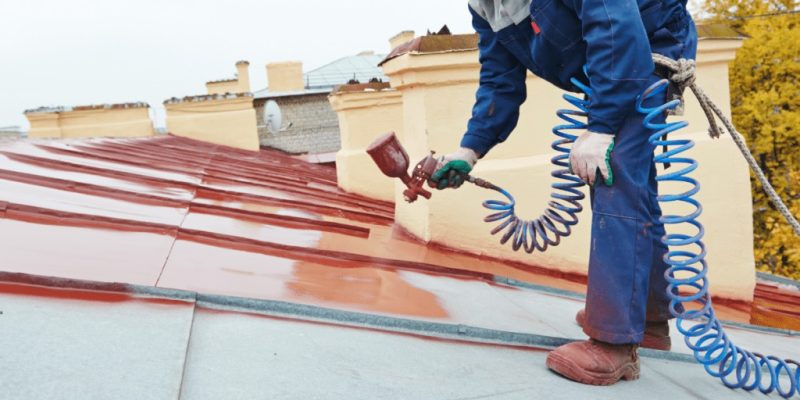
The final coating is what most people picture when they think of roof painting. Quality roof coatings are specifically formulated for exterior UV exposure, temperature fluctuation, and moisture resistance. Airless spray application is common for consistent coverage, but detail work — around flashing, gutters, and ridgelines — typically requires a brush or roller finish. The number of coats specified in the quote is worth confirming: most quality jobs require two coats as a minimum.
Colorbond and Metal Roofs: What’s Different
Metal roofs — including Colorbond — have specific requirements that differ from tiled surfaces. The original factory finish on Colorbond steel is durable, but it does fade over time. When the surface is properly cleaned, lightly abraded to create adhesion, and coated with a flexible, heat-resistant paint formulated for metal, the result can look close to original and will extend the roof’s service life significantly.
Using the wrong product on a metal roof is a common mistake. Standard masonry paint does not flex and move with the metal through temperature cycles, which causes it to crack and peel within a season or two. Always confirm that the painter is using a product specifically rated for metal roofing.
How Long Does Roof Paint Last in Queensland’s Climate?
Queensland’s climate is harder on exterior coatings than most. High UV intensity, extreme summer heat, heavy seasonal rainfall, and — in coastal areas — airborne salt all accelerate the breakdown of surface coatings. This is not an argument against roof painting; it is an argument for doing it properly.
A professionally applied roof coating on a well-prepared surface, using products appropriate for Queensland conditions, can realistically last ten to fifteen years. A rushed job on an inadequately prepared surface, using a generic coating, may begin showing deterioration in three to five years. The difference in lifespan almost always comes down to preparation and product selection — not the brand of paint.
Coastal properties face additional considerations. Salt-laden air accelerates corrosion on metal surfaces and degrades certain coatings faster than in inland areas. Professionals working regularly in coastal environments understand this and adjust their product and process choices accordingly.
Comparing Quotes: What to Look For
When comparing quotes for roof painting, price alone is a poor guide. Two quotes for the same house can vary significantly because they are scoping different work. The cheapest quote often excludes preparation steps that the more detailed quote includes. A year or two later, the homeowner who chose the lowest price is often back to square one.
A few things worth confirming in any quote: whether high-pressure cleaning is included; what repairs to mortar, tiles, or fasteners are covered; which specific products will be used and whether they are appropriate for the roof type; how many coats will be applied; and whether a workmanship guarantee is offered. Reputable operators stand behind their work for a meaningful period — typically five years or more.
It is also worth confirming that the contractor holds a current Queensland Building and Construction Commission (QBCC) licence. For residential painting work valued above $3,300, this is a legal requirement — not just a nice-to-have credential.
The Right Time to Act
Homeowners often wait until a roof looks obviously deteriorated before taking action. In most cases, acting earlier produces a better result at a lower cost. A roof that is faded and slightly porous is a good candidate for painting. A roof that has progressed to cracked pointing, structural damage, and active water ingress requires significantly more remediation work before any coating makes sense.
Regular inspection — particularly after significant weather events — helps homeowners stay ahead of deterioration rather than reacting to it. Most established painting contractors are happy to provide an honest assessment of roof condition as part of a no-obligation inspection, which gives homeowners the information they need to plan and budget appropriately.
Roof painting, done properly, is one of the more cost-effective ways to protect a significant asset. The key is understanding what “done properly” actually involves — and choosing a contractor whose quoting process reflects that standard.